
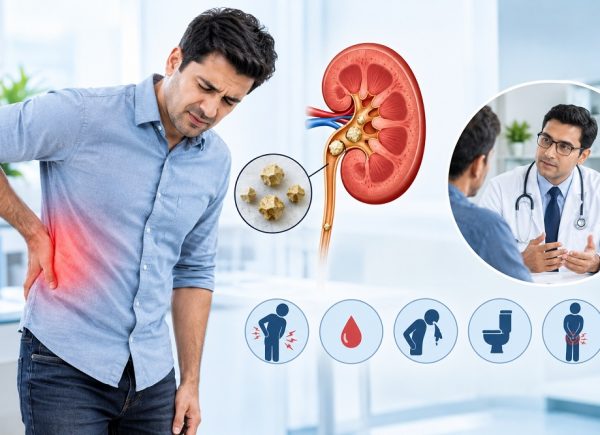

Kidney stones can begin with mild discomfort and quickly turn into intense pain. They develop when certain minerals and salts in the urine become concentrated and form hard crystals inside the kidneys. Some small stones pass naturally without major complications, while larger stones can become stuck and cause significant pain, urinary blockage, or infection.
Knowing the warning signs can help you seek medical attention at the right time. If you have persistent pain, blood in your urine, difficulty urinating, or repeated episodes of kidney stones, consulting a Urologist in Rohini can help identify the problem and determine whether treatment is needed.
What Are Kidney Stones?
Kidney stones are solid deposits that form inside the kidneys. They can vary greatly in size, from tiny crystals to larger stones that may obstruct the urinary tract.
A stone may remain inside the kidney without causing noticeable symptoms. Problems often begin when it moves into the ureter, the narrow tube connecting the kidney to the bladder. If the stone becomes lodged there, it can interfere with the normal flow of urine and cause severe discomfort.
Several factors can increase the risk of kidney stones, including inadequate fluid intake, certain dietary habits, family history, some medical conditions, and previous kidney stones.
Common Symptoms of Kidney Stones
Kidney stone symptoms can differ depending on the stone’s size and location. Some of the most common signs include:
1. Severe Pain in the Side or Back
One of the classic symptoms is sudden, intense pain in the side or lower back. The pain may come in waves and can sometimes move toward the abdomen, groin, or lower abdomen as the stone travels through the urinary tract.
Unlike ordinary muscle pain, kidney stone pain may change in intensity or location.
2. Pain or Burning While Urinating
A stone near the lower urinary tract can cause discomfort or a burning sensation when you urinate. You may also feel an increased urge to use the bathroom.
Although these symptoms can occur with kidney stones, they may also indicate a urinary tract infection. A proper medical evaluation can help determine the cause.
3. Blood in the Urine
Kidney stones can irritate the lining of the urinary tract, resulting in blood in the urine. The urine may appear pink, red, or brown, although blood may sometimes only be detected through laboratory testing.
Blood in the urine should not automatically be assumed to be caused by a kidney stone. Other urinary conditions can also cause this symptom, so medical assessment is important.
4. Frequent Urination
A stone located close to the bladder may create a persistent sensation that you need to urinate. Some people may need to visit the bathroom more frequently or may pass only small amounts of urine.
5. Nausea and Vomiting
Severe kidney stone pain can trigger nausea or vomiting. If you are unable to keep fluids down, dehydration can become an additional concern.
6. Cloudy or Strong-Smelling Urine
Changes in urine appearance or smell may sometimes occur with kidney stones. However, cloudy or foul-smelling urine can also be associated with infection.
If these symptoms occur together with fever or chills, prompt medical attention is particularly important.
When Should You See a Urologist?
Not every kidney stone requires a procedure. Small stones may pass naturally with appropriate medical guidance. However, certain symptoms indicate that you should not simply wait for the stone to pass.
Consider seeing a Urologist in Rohini if you experience:
- Severe or persistent pain
- Blood in the urine
- Repeated kidney stones
- Difficulty passing urine
- Painful urination
- Persistent nausea or vomiting
- Recurrent urinary infections
- A stone that does not pass naturally
- Symptoms that interfere with sleep or daily activities
A urologist can use your symptoms, medical history, imaging, and laboratory tests to determine the size and location of the stone and recommend an appropriate approach.
When Is Kidney Stone Treatment Necessary?
The treatment depends on several factors, including the stone’s size, location, composition, and whether it is blocking urine flow.
Small stones may sometimes be managed with fluids, pain management, medicines that assist passage, and observation. Larger stones or stones causing obstruction may require an intervention.
Treatment may also be necessary when a stone causes repeated infections, persistent pain, kidney problems, or fails to pass naturally.
Your doctor may recommend imaging such as an ultrasound or CT scan to understand the situation before deciding on treatment.
What Is Kidney Stone Laser Treatment?
Laser treatment is one minimally invasive option for removing certain kidney and ureteric stones. During the procedure, a thin ureteroscope is passed through the natural urinary passage to reach the stone.
A fine laser fiber is then used to break the stone into smaller fragments. Depending on the stone, the fragments can either be removed with specialized instruments or broken into very small pieces that can pass through urine.
For suitable patients, Kidney Stone Laser Treatment in Rohini can offer a minimally invasive approach without the large external incision associated with traditional open surgery.
However, laser treatment is not automatically required for every stone. The appropriate procedure depends on individual factors such as stone size, location, anatomy, and overall health.
How Does Laser Treatment Work?
The procedure generally involves several stages.
First, the patient is evaluated through imaging and other appropriate tests. During treatment, anesthesia is provided to ensure comfort.
The urologist carefully guides a ureteroscope through the urinary tract until the stone is located. A laser fiber is then used to fragment the stone.
Depending on the circumstances, fragments may be retrieved using a small basket or allowed to pass naturally. In some cases, a temporary ureteral stent may be placed to support urine drainage while the urinary tract heals.
The duration and recovery period can vary depending on the complexity of the procedure.
Benefits of Laser Stone Treatment
For appropriately selected patients, Kidney Stone Laser Treatment in Rohini may provide several advantages:
- Minimally invasive approach
- No large external surgical incision
- Ability to treat stones in difficult locations
- Effective fragmentation of many stones
- Generally shorter recovery than traditional open surgery
- Possibility of a short hospital stay in suitable cases
Despite these benefits, every procedure has potential risks. Your doctor should explain the expected benefits, possible complications, alternatives, and recovery process before treatment.
What Happens After Laser Treatment?
Recovery varies from patient to patient. Some people may experience mild urinary discomfort, increased urinary frequency, or a small amount of blood in the urine for a short period.
If a ureteral stent has been placed, it may cause temporary discomfort or a frequent urge to urinate. Your doctor will explain how long it needs to remain in place and when it should be removed.
After treatment, you may be advised to drink an appropriate amount of fluid, take prescribed medicines, avoid strenuous activity for a short period, and attend follow-up appointments.
If you develop severe pain, fever, chills, difficulty urinating, or other concerning symptoms after a procedure, contact your healthcare provider promptly.
Can Kidney Stones Be Prevented?
Treating an existing stone does not necessarily prevent new stones from forming. Prevention depends partly on understanding why the stone developed.
Drinking an adequate amount of water is one of the most important general measures. Dietary recommendations may vary depending on the type of stone and individual risk factors.
Other preventive strategies may include:
- Staying adequately hydrated
- Limiting excessive salt intake
- Following a balanced diet
- Maintaining a healthy weight
- Avoiding excessive consumption of certain foods when medically advised
- Following personalized recommendations after stone analysis
People who have recurrent stones may benefit from further evaluation to identify factors contributing to stone formation.
Why Early Evaluation Matters
Ignoring kidney stone symptoms can sometimes allow a blockage or infection to become more serious. A stone that obstructs urine flow may affect kidney function, particularly when the obstruction is prolonged or associated with infection.
That does not mean every episode of kidney stone pain is an emergency. However, persistent or severe symptoms should be evaluated rather than managed indefinitely at home.
If you are unsure whether your symptoms require treatment, a Urologist in Rohini can assess the condition and explain whether observation, medication, or a procedure may be appropriate.
Final Thoughts
Kidney stones can range from tiny, easily passable crystals to larger stones that cause severe pain and urinary obstruction. Recognizing symptoms such as intense side or back pain, blood in the urine, painful urination, nausea, and difficulty passing urine can help you seek appropriate care sooner.
Some stones can pass naturally, while others require medical intervention. When a procedure is needed, laser technology may be one of the minimally invasive treatment options available for suitable patients.
If your stone is causing persistent symptoms or has not passed naturally, Kidney Stone Laser Treatment in Rohini may be discussed as part of your treatment options after proper evaluation.
Ultimately, the right treatment depends on your individual condition. Consulting a Urologist in Rohini can help you understand the cause of your symptoms, assess the stone, and choose an appropriate treatment plan based on its size, location, and potential risks.